
Our voting system is broken,
but it doesn't have to stay that way
When we hear "one person, one vote," most people think of the right to vote itself, but the fight for an equal vote has been a long one, and gaining the right to vote was only the first step. The idea is that your vote should be just as powerful as mine, no matter who you are, what party you belong to, where you live, or how many candidates are on your side.
The Equal Vote Coalition's mission is to promote true equality in the vote itself.
Our current voting method is inherently unequal, and this inequality has decidedly negative consequences: outsized influence of money in politics, hyper-partisan rancor, and widespread electoral disenchantment.
What We Do
The Equal Vote Coalition works to upgrade our elections to improve democracy for all. This includes researching voting science, creating and sharing educational content, growing the coalition of democracy advocates, and supporting practical electoral reform efforts. Change starts with that light bulb moment when people connect the dots between our broken political landscape and the root causes, and suddenly are able to visualize concrete solutions that are actionable.
Equal Vote recommends upgrading our elections to more fair and accurate voting methods. The key is that voters can freely support the candidates they like, without pressures to vote strategically for the candidates they think can win. Top tier better voting options include STAR Voting, Approval Voting and Ranked Robin for voters who want a fully expressive, traditional, or ranked ballot.
We see voting method reform as the foundation of the voting rights movement, but in order to have an equal vote there are a number of other essential elements. Voting method reform, voting rights, fair districting, election integrity, anti-corruption, and combatting the influence of money in politics unite our coalition and form the foundation of the work we do.
One Person, One Vote:
The U.S. Supreme Court has declared that equality of voting - one person, one vote - means that the weight and worth of the citizens' votes as nearly as is practicable must be the same. The astute reader may have noticed that the Supreme Court gave themselves an out with the "as nearly as is practicable" clause, and at the time of this ruling no voting method in use had ever delivered an equal vote, but that has changed.
In other words, if an election was tied before I voted, you should always be able to cast an opposite vote that would bring the election back to a tie.
Vote-Splitting and the Equal Vote:
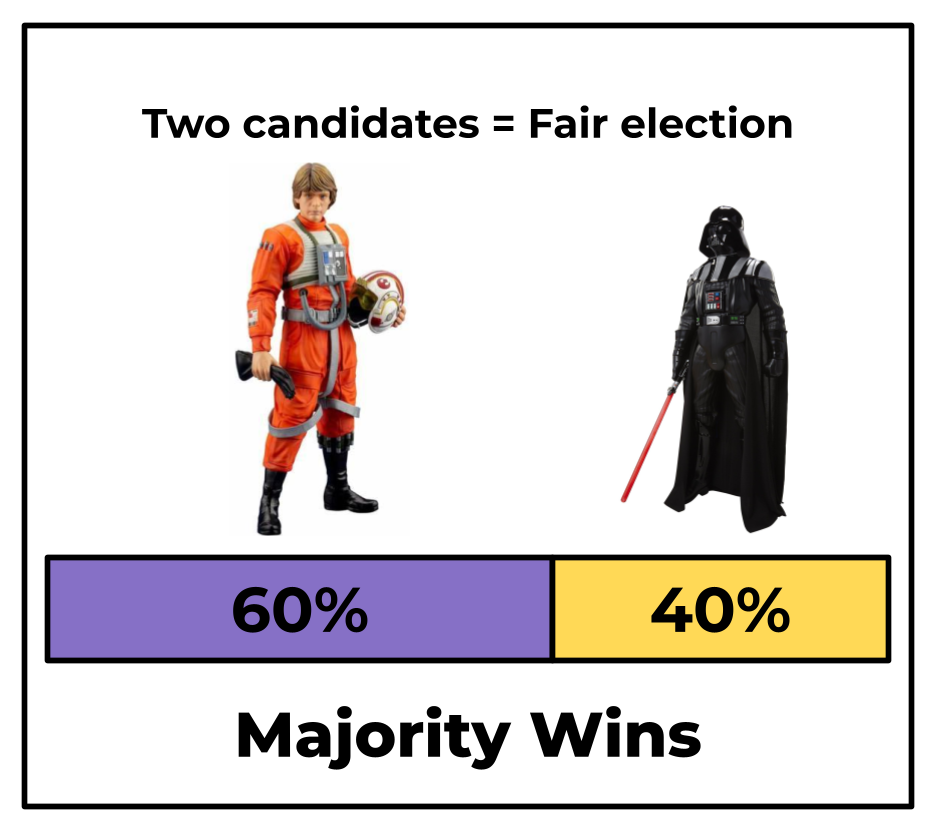
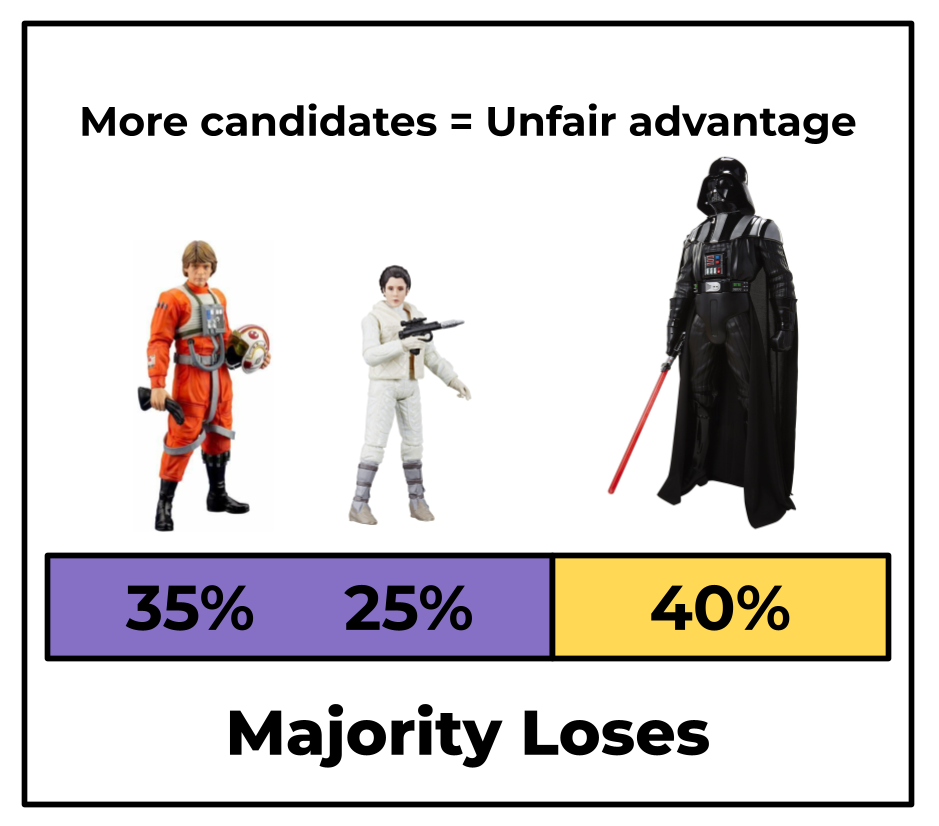
Traditional "Choose-One" voting works great if there are only two candidates in the race. The majority always wins. Easy. But what if there are more candidates in the race?
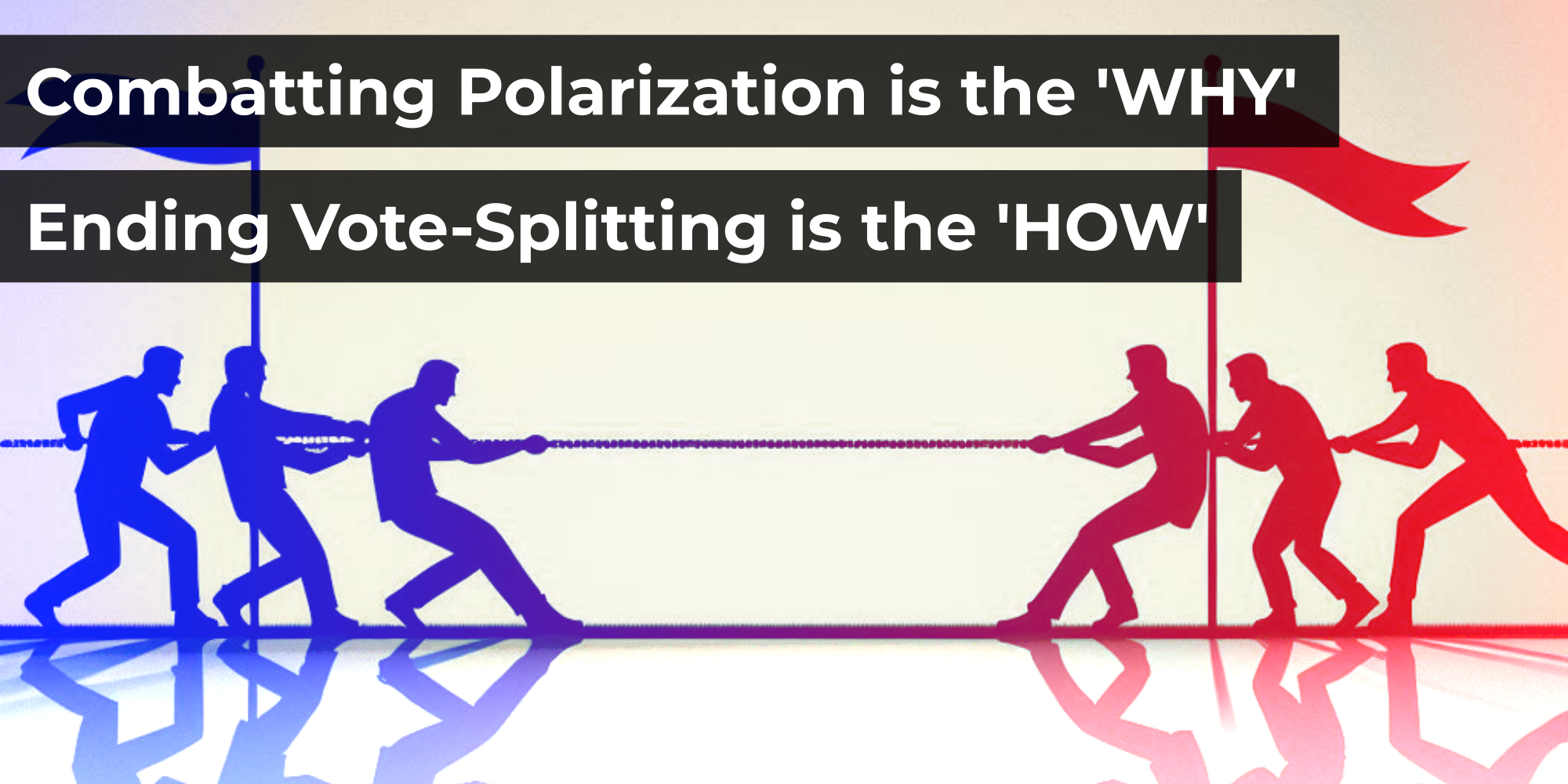
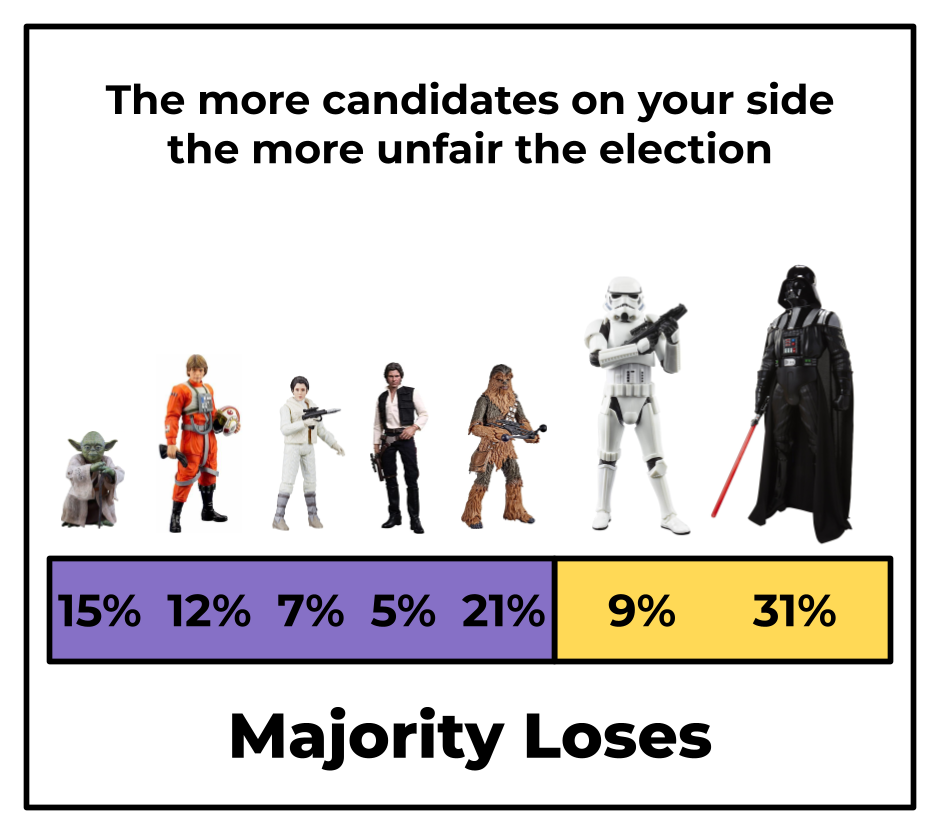
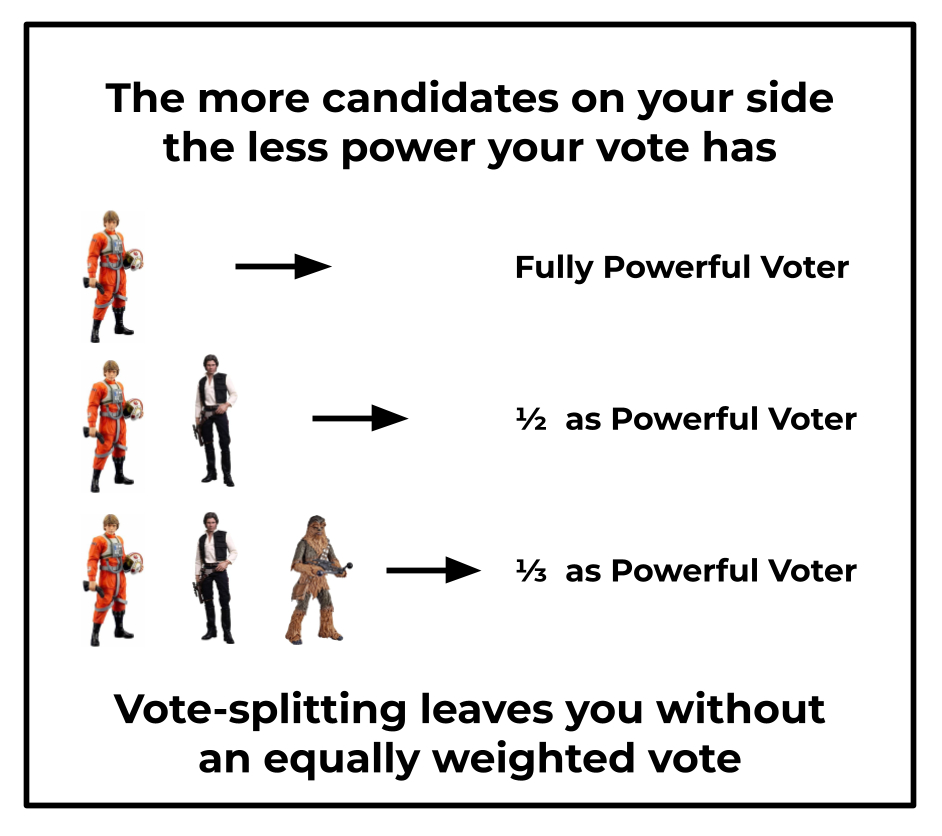
When voters are only allowed to support one candidate, it puts voters who have more than one candidate on their side at a serious disadvantage. A coalition or faction who runs more candidates than the other side risks ending up divided and conquered -- splitting the vote and electing a candidate who was opposed by a majority of voters. It's called the Spoiler Effect.
The examples at the national level are notorious: In 2000, Ralph Nader split the left vote and cost Democrats the presidency. In 1992 Ross Perot split the right vote and cost Republicans the presidency. Both of these candidates (and their supporters) were scapegoated even though the system was to blame, and the resulting backlash dealt a crushing blow to 3rd parties. And it isn't just a US problem. Around the world it's been proven time and time again that Choose-One Plurality voting leads in two party domination as voters learn the hard way that they need to vote for a frontrunner if they want their vote to count.
Vote-Splitting = Divided and Conquered
The Equal Vote = Leveling the Playing Field:
In order to achieve fair representation in politics, candidates need a level playing field, but the Spoiler Effect creates a glass-ceiling. Voters face strong incentives to carefully study the field and only vote for the candidate on their side who they think can actually win, even if that person is just the lesser of two evils. Further compounding the issue is the fact that who is deemed electable is in large part determined by media bias. Candidates who are well funded, those who have the name recognition, and those who are already in positions of power, are all much more likely to be seen as electable, and to get this strategic voting boost.
The reality is that voting methods which give a strong advantage to those who are deemed most electable will continue to bias outcomes in favor of incumbents, uphold two party domination, and magnify the influence of money in politics, regardless of public opinion.
Vote-Splitting and Alternative Voting methods:
Ranked Choice Voting, where voters rank candidates in order of preference has been lauded as a solution, but in elections where the third candidate is actually competitive, vote-splitting remains a serious issue and RCV only offers a marginal improvement compared to a primary and general election with Choose-One Plurality voting.
The issue is in the way the votes are actually counted. The version of RCV in use today (Instant Runoff Voting) works like a series of Choose-One elections where the 1st choice votes are counted and one candidate is eliminated in each round. It works well if your favorite is weak and your vote is quick to transfer, but for voters whose favorite is a strong underdog that isn't eliminated until late in the game, their next choice may never come into play. One study of 96 recent elections in the USA found that on average over 10% of RCV ballots were not counted in the deciding round of the election. This study and others also showed that historically marginalized communities are more likely to have their ballot not count in RCV. Another study showed that Ranked Choice is expected to lead to spoilers in 15% of competitive elections, or worse if there are more candidates. We can do better.
Luckily, many voting methods can effectively prevent vote-splitting. As it turns out, when voters can weigh in on each candidate individually, when all ballot data is counted, and when voters are able to show equal preference, vote-splitting can be eliminated. All voting methods which do this pass the Equal Vote Criterion, including STAR Voting, Score Voting, Approval Voting, 3-2-1 Voting, some Condorcet methods like Minimax voting, Ranked STAR, and a number of others. Whether you prefer a traditional ballot, a 5 star ballot, or a ranked ballot there are voting methods that can ensure an equally weighted vote. This is not something we need to compromise on!
Raising the bar for elections, and mandating that voting methods not play favorites would have massive repercussions; empowering voters to vote their conscience, eliminating wasted votes, making politics less polarized, making campaigns more positive, making it more accessible to run for office, breaking glass-ceilings, and delivering better representation.
STAR Voting:
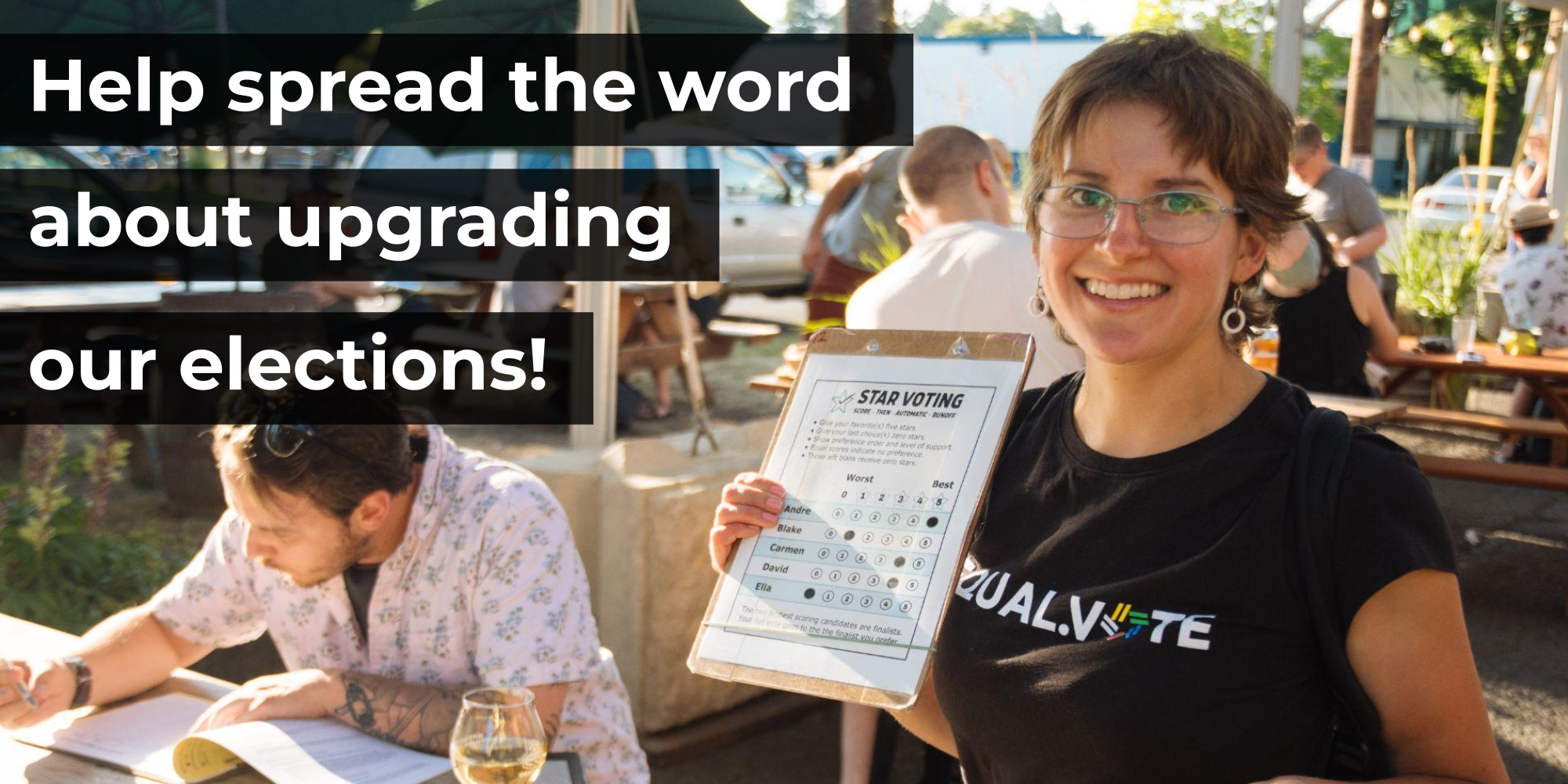
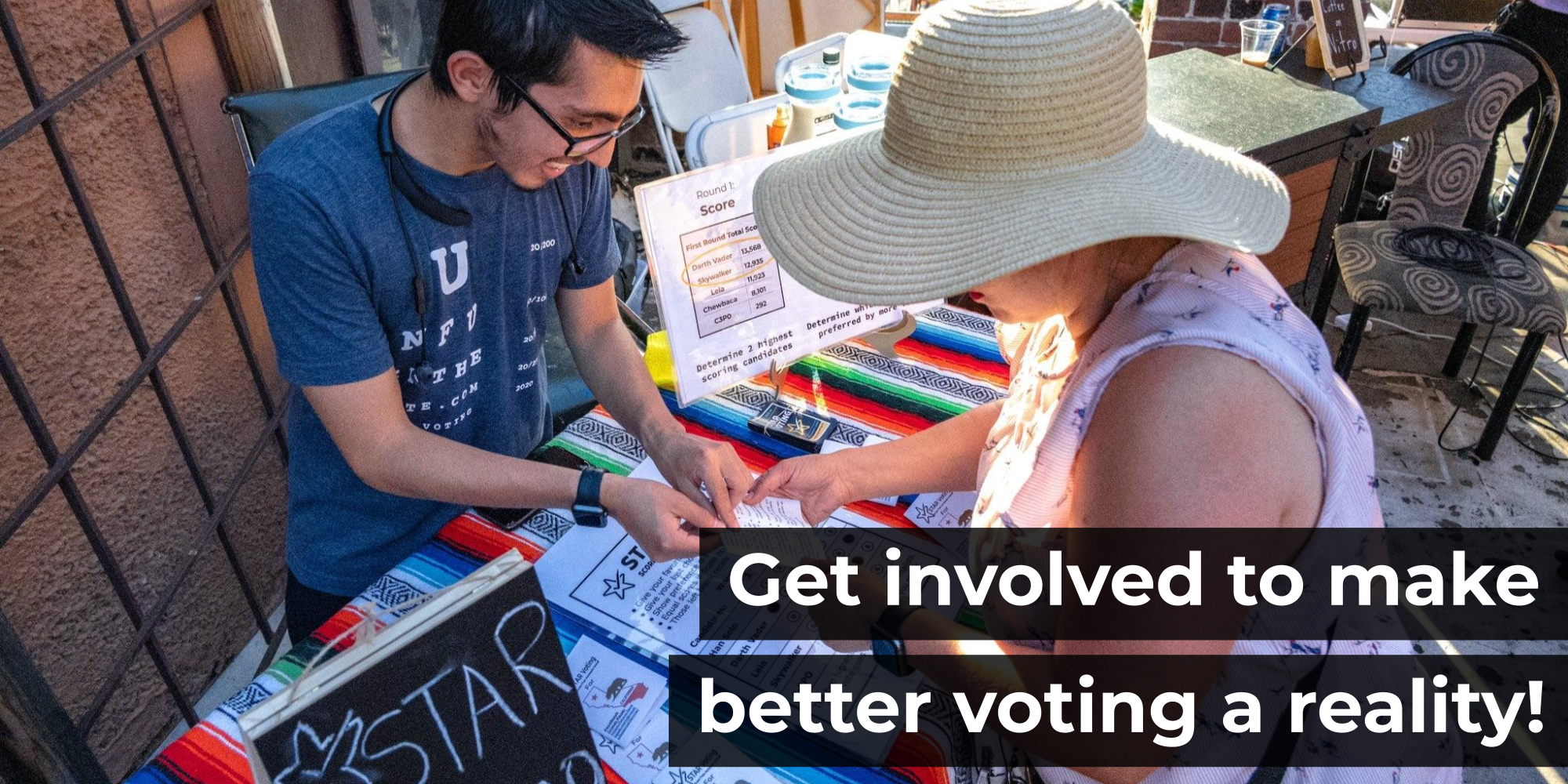
The Equal Vote Coalition is the driving force behind STAR Voting, an innovative voting method for more fair and representative elections. With STAR Voting voters use a 5 star ballot to show their preference order and level of support for the candidates. STAR Voting effectively eliminates vote splitting and the spoiler effect, empowering voters and encouraging more positive campaigning, which in turn leads to more fair and representative elections.
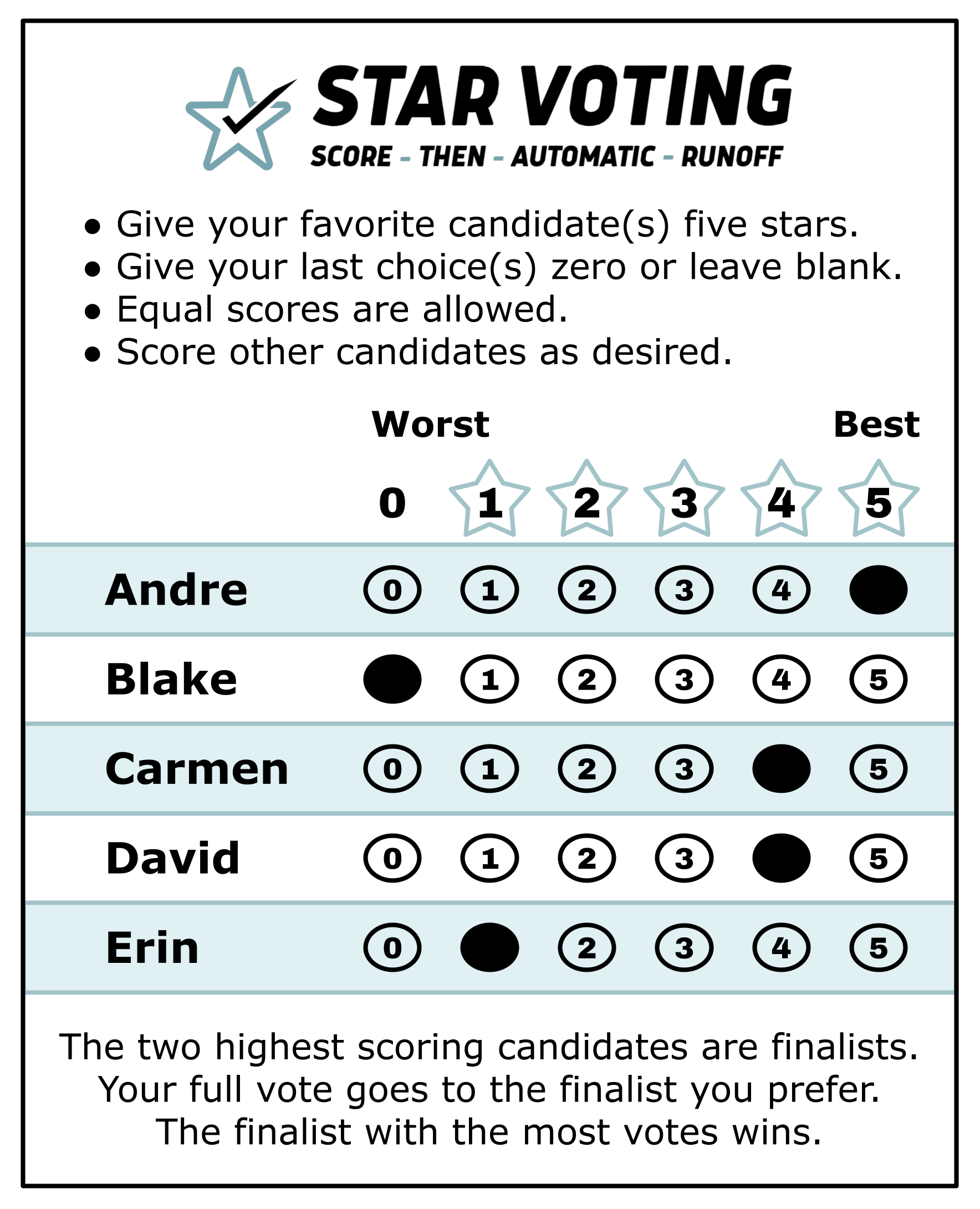
STAR stands for Score - Then - Automatic - Runoff, and that's exactly how it works:
You score candidates from zero (worst) up to 5 stars (best). Your vote automatically goes to the finalist you preferred between the two highest scoring candidates, so even if your favorite can't win, it's safe to vote your conscience without worrying about wasting your vote.
Watch the How Does STAR Voting Work video!
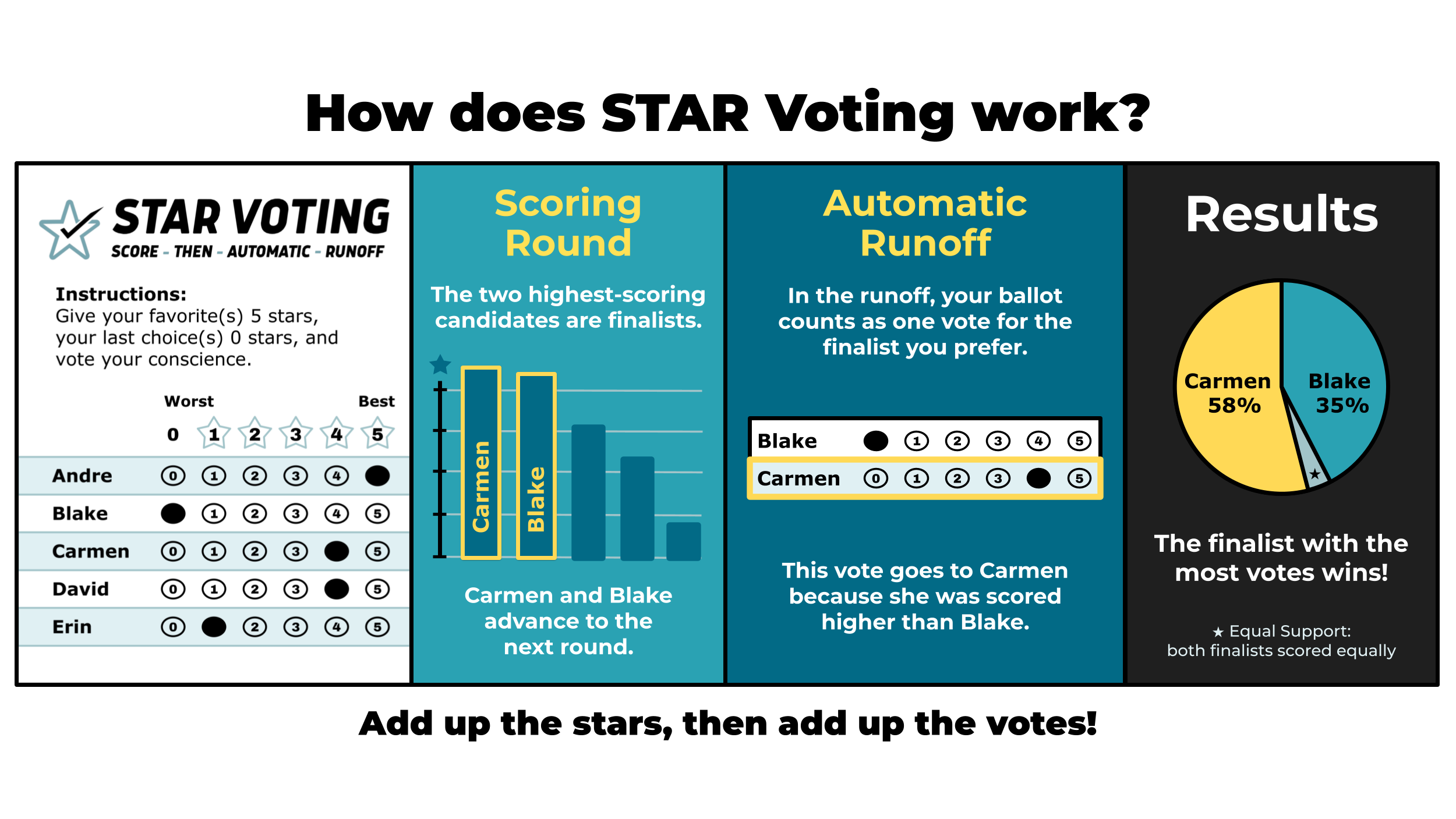
Learn more about STAR Voting and the movement behind it on the STAR Voting website.
Follow us on social media:
 |
 |
 |
 |
 |